Pollution in our seas is a local and a global problem, mainly caused by rubbish entering the sea from the land, not through sea based industries.
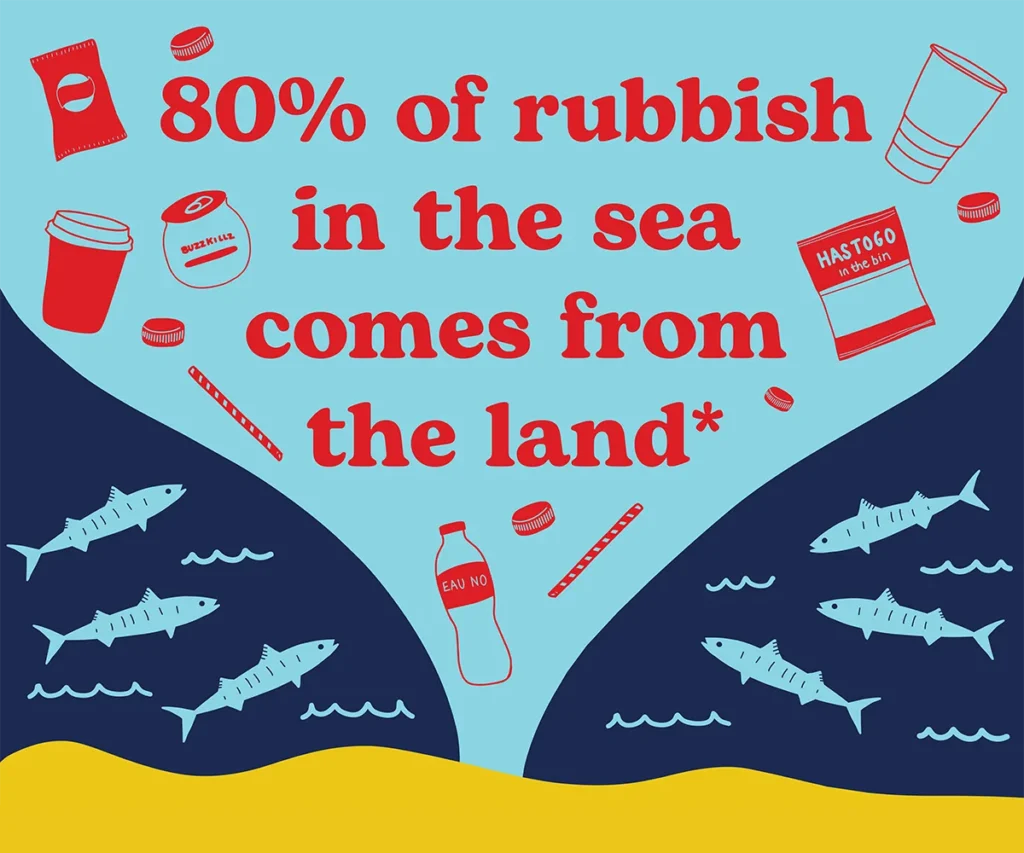
Around 80% of marine pollution comes from land-based sources. When rubbish is left on the beach, wind or waves carry it to the sea, where it can harm our wildlife, and pollute our coastline.
Every year more than 11 million metric tonnes of plastic enters our seas, a particularly toxic pollutant that has the biggest impact on ecosystems and wildlife.
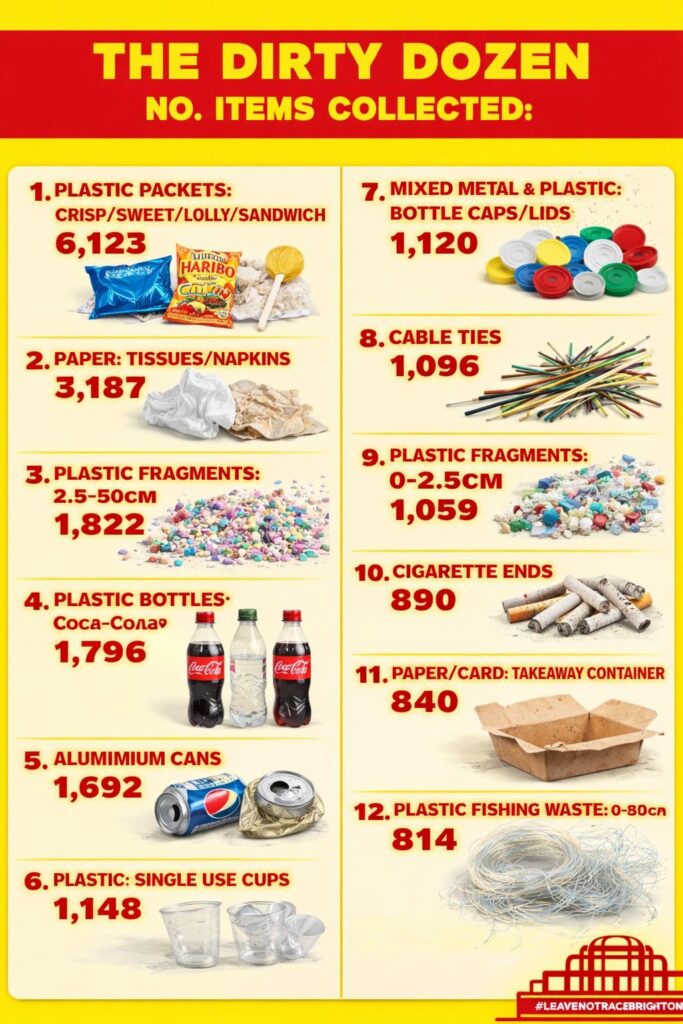
At our regular community beach cleans, we gather data about everything we collect and sort, and single-use plastic makes up by far the biggest % of rubbish we collect, as you can see from our ‘Dirty Dozen’ list below.
What can we all do?
We can all take simple actions to reduce the amount of rubbish and plastic entering our sea and protect our local coastal and marine environment. Here’s a few simple things you can do today to make a positive and real change.
Refuse single-use items or packaging, or choose alternatives
Dispose of your rubbish responsibly. Put it into a bin with capacity (not piled next to a bin), or take it home
Recycle responsibly
Carry and use a reusable cup and bottle
What is Leave No Trace Brighton doing?
Removing irresponsibly disposed waste from our beaches through our regular beach cleans is only part of what we do. Our aim is also to reduce the amount of single-use plastic used in the city, working with local businesses, events, organisers and our local council.