
Who lives in our sea?
We share the sea off Brighton & Hove with some wonderful wildlife including these amazing species:

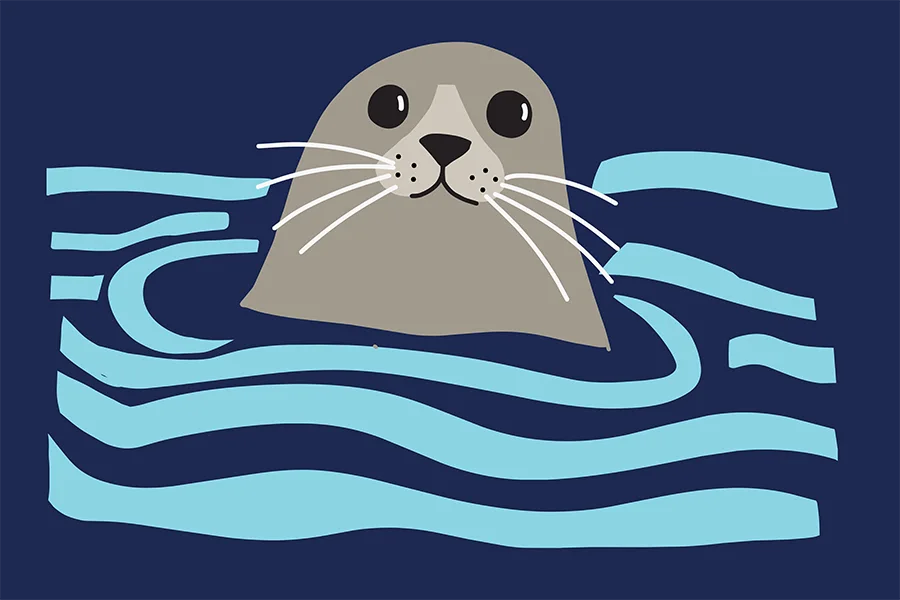
Grey seal
The larger of the 2 species of seal found in the UK, you can tell it’s a grey seal if it has a long sloping head rather than a dog-like face. They are also much bigger than common seals – males (bulls) can be 2 metres in length and a massive 300kg. They love eating fish and will also eat squid, octopuses, and crustaceans like crabs.

Common Starfish
They are usually orange and grow up to 30cm in width. They have five spiny arms and amazingly if they lose an arm they might well be able to grow it back. You probably wouldn’t want to invite one for dinner – they eat shellfish such as mussels and oysters by forcing their own stomachs inside the shell and dissolving the creature inside.

Bottlenose dolphin
The most common dolphin on the Sussex coast, these fabulous creatures mainly like to hang around pods of 10 – 30. They have a large grey body, a sickle shaped dorsal fin and can grow up to about 4m long.
If you’re lucky enough to witness one launching itself from the waves, consider yourself honoured. These incredible animals are wild, free and moving through their own world, and being given a glimpse of that is an absolute privilege.

Mackerel
A fast swimming fish normally around 30cm long, with shiny blue-green and silver ‘tiger-striped’ skin. They swim around in large shoals and are found close to the shore in the summer months. Lots of animals find them very tasty including whales, dolphins, tuna, seals and humans.
Seabream
A large silvery fish, with an oval shape and a long single dorsal fin. They may have a small mouth but seabream have seriously strong teeth for tucking into shellfish, molluscs, crabs, and small fish. All seabream are born female and can turn into males when they grow to 30cm – if they are over 40cm they are pretty much guaranteed to be male.

Scallop
Scallops are bivalve molluscs that live in distinctive ridged shells and can grow up to 15cm. The 2 shells they have are different, one is curved like a bowl and the other one is flat. Starfish love to eat them – they try to escape by quickly opening and shutting their shells which hopefully creates enough movement to stop them being lunch.
Cuttlefish
They aren’t actually fish at all but a type of mollusc and are related to octopuses and squid. Growing up to 45cm long, cuttlefish are masters of disguise and can instantly change their colour and texture to hide on the seabed. You can often see their distinctive white cuttlebones washed up on our beaches so we know there’s a lot around.

Bass
Bass is a silver fish with 2 distinctive dorsal (top) fins and can grow up to 100cm in length. When they are young they like to hang around together in estuaries before heading out into deeper water as adults. They prefer to dine on crustaceans and small fish rather than being eaten themselves.
Plaice
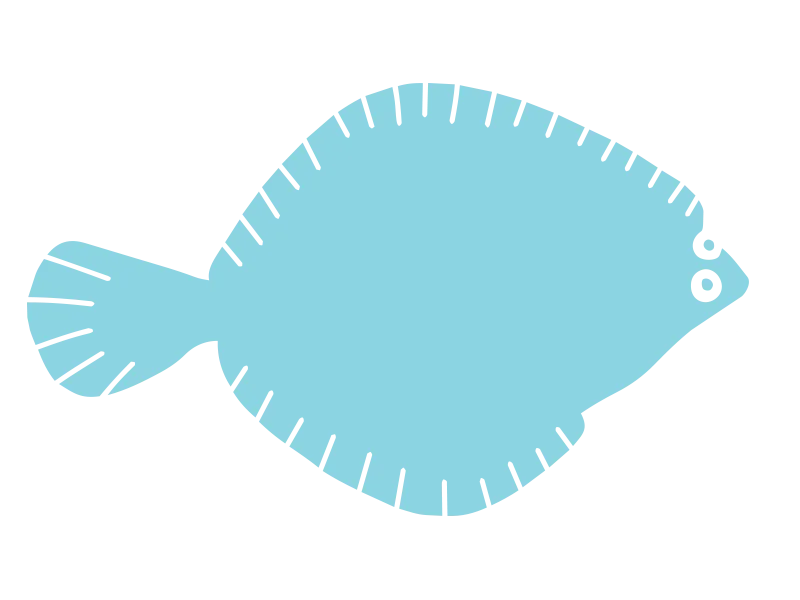
Plaice are a type of flatfish with smooth brown skin and with distinctive red spots, excellently camouflaged on the seabed. During the day they keep themselves safe by burying themselves in the sand of the seabed and come out to feed on shellfish at night. When they are born they look like regular fish but grow into flatfish as they grow up – as they flatten out, the left eye moves round to join the right eye!
Cecil the seal
A special mention for ‘Cecil’, the large bull Grey Seal who was first spotted a few years ago and is a regular sight in our local sea and hauled up on the beach. He’s now been joined by several others who enjoy our bit of coastline.
If you spot Cecil or any seal, please give them plenty of space, never approach, touch or attempt to move them, and keep dogs on a lead. If they are hauled up on the beach, they are there for a reason and need time to rest undisturbed.
If you’re concerned about an injured or distressed seal, contact British Divers Marine Life Rescue on the rescue hotline: 01825 765546 for advice.